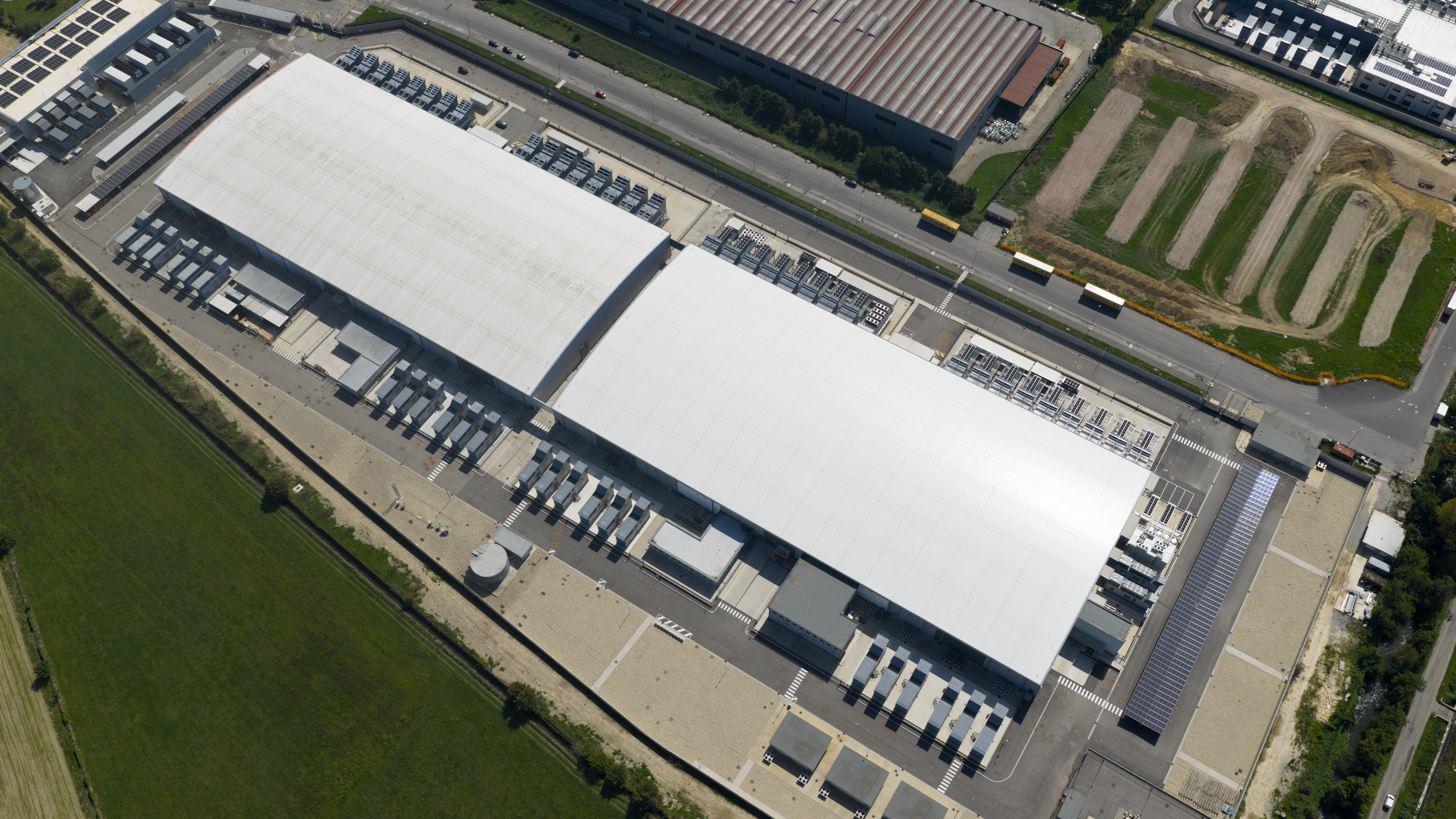
We’re in the middle of an unprecedented evolution of modern networks, driven by hyperscalers’ relentless push to advance AI. The appetite for compute and infrastructure is enormous, and it’s quickly becoming a race to see who gets there first. It is quite possible that only one or two of these organizations will be victorious (TBD what that looks like for the laggards). With seemingly endless budgets and a drive to push the bleeding edge on technology, hyperscalers are investing heavily in the compute and bandwidth needed for AI. This surge in demand is now creating significant downstream challenges in the technology infrastructure market.
The Shift Happening Inside the Optical Transport Market
At the physical Optical Layer of networks, aka “Layer 1,” you’ve traditionally had a handful of dominant OEMs like Ciena, Infinera (now part of Nokia), and Cisco, which account for most optical networks as we know them today. Over the past couple of years, smaller competitors have attempted to enter this space. Some were successful, while others died shortly after taking off.
What’s happening right now is simple but dramatic: Hyperscalers are consuming most of the available supply of optical hardware and components. Companies like Meta, Apple, Google, and Amazon are investing billions into AI infrastructure. To support that, they’re building massive data centers, high-capacity interconnect networks, and buying equipment in volumes the industry hasn’t seen before.
The result is a reprioritization across major OEMs. If you’re not one of the aforementioned organizations, your orders are getting pushed back. Even customers with significant existing contracts are seeing delivery timelines stretch from 10–16 weeks to 40+ weeks.
The Ripple Effect: Who Feels the Impact?
The issue has cascaded downstream.
- Web scalers and neo-cloud providers are competing for the same gear as the hyperscalers
- Telecom service providers face enormous pressure (from the hyperscale clients) to upgrade their core networks to 400G and 800G transport, with 1.6Tb on the horizon
- Enterprises building campus or private data center networks face the same shortages
At this point, if you operate a physical network and rely on traditional, large OEM optical equipment, you’re likely experiencing significant delays. From a supply-chain perspective, the situation feels very similar to the disruptions we saw during COVID, but amplified. There’s significantly more capital flowing into network infrastructure, which further widens the gap between supply and demand.
Where Disruptive Vendors Gain an Advantage
This environment has created an opportunity for smaller, more agile vendors. Since the disruptive manufacturers aren’t supporting the Hyperscalers directly (yet), they can often maintain a more stable supply chain and faster delivery timelines.
OSI Global finds itself uniquely positioned to help our client base navigate these challenging times. Several years ago, we entered into a partnership with Smartoptics (a next-gen optical equipment manufacturer) to align with our mindset of offering bleeding-edge, industry-changing solutions, all while not looking or feeling like a traditional OEM.
The partnership has grown substantially over the years, and we have become their largest global partner. This evolution on both the operational and technological sides of the business enables OSI Global to provide our customers with cost-effective, immediately available, and market-ready optical equipment for deployment. It also allows us to build and qualify new hardware coming to market, further future-proofing our clients’ networks.
Where some service providers are facing 40-week delays on transponders and optics, we can often ship same-day or next-day from our domestic inventory. For larger, complete system builds, timelines typically fall in the 6–8 week range (and we can often expedite to meet tight timeframes).
This matters because delays directly impact revenue. Faster deployment means service providers can bring revenue-generating customers online sooner.
What the Solution Looks Like in Practice
Most of the demand we see centers around 100G, 400G, and 800G connectivity, with 1.6Tb on the horizon. There are a few primary deployment models:
Coherent Transceivers: These plug directly into routers or switches and enable high-capacity optical transport over long distances, condensing the physical footprint and reducing failure points in the network. We currently offer these in 100G-800G options with some exciting new items coming in the near future.
Complete Optical Systems: This includes ROADMs (Reconfigurable Optical Add-Drop Multiplexers) or point-to-point optical systems designed to maximize capacity; up to 25.6Tb on a single fiber pair.
Transponders: Transponders are where shortages are hitting hardest — and where we have the greatest opportunity to make the most significant impact.
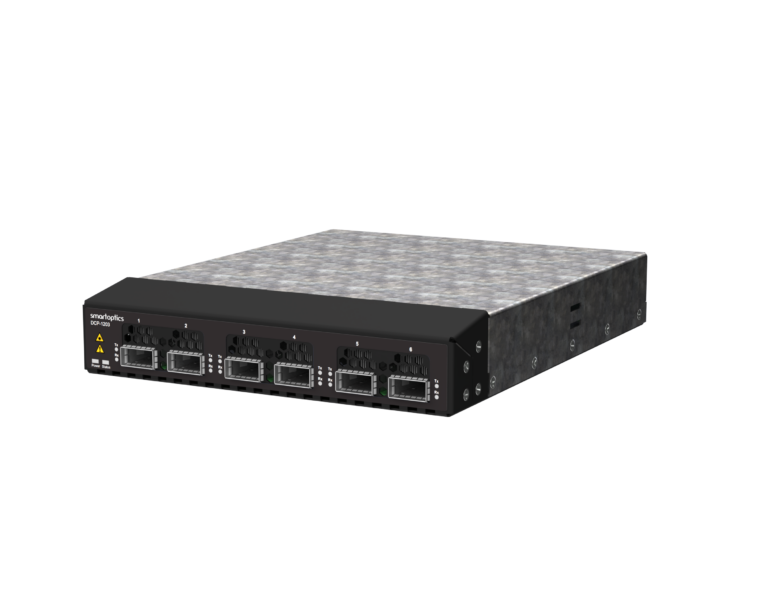
Key Smartoptics platforms include:
- DCP 1203– 400G line side with flexible 400G or breakout 100G client handoffs
- DCP 404– 400G wavelength with four 100G client handoffs
- DCP 802– Next-generation platform supporting dual 800G wavelengths with flexible breakout options
The Power of Alien Wavelength Solutions
One of the most practical deployment strategies is what’s called an alien wave solution.
An alien wave solution allows Smartoptics’ transponders to inject wavelengths over an existing optical system from another vendor. In other words, customers don’t have to rip and replace their legacy infrastructure. Instead, they can extend capacity by running Smartoptics equipment over their current transport network. This interoperability is often the fastest and most cost-effective path to expansion.
A Finite Window of Opportunity
There’s a timing element to all of this. As long as large OEMs continue prioritizing hyperscale demand, alternative suppliers can help fill the gap.
Right now, our product availability is stable. Our technological roadmap remains on track. While others are pushing back releases and delivery commitments, we’re positioned to deliver what we’ve promised. For service providers and enterprises under pressure to scale bandwidth quickly, reliability is becoming just as important as performance.
Glossary
Hyperscaler – A very large cloud or technology company that operates massive data centers and computing infrastructure at global scale.
Layer 1 – The physical layer of a network that includes fiber optics and transmission hardware.
400G / 800G Connectivity – Optical transport speeds capable of transmitting 400 or 800 gigabits per second.
Transponder – A device that converts client signals into optical wavelengths for transmission across fiber networks.
Coherent Transceiver – A pluggable optical module that uses advanced signal processing to transmit high-capacity data over long distances.
ROADM (Reconfigurable Optical Add-Drop Multiplexer) – Equipment that dynamically routes optical wavelengths through a fiber network.
Alien Wavelength (Alien Wave) – An optical signal generated by equipment from one vendor that runs over another vendor’s optical system.