

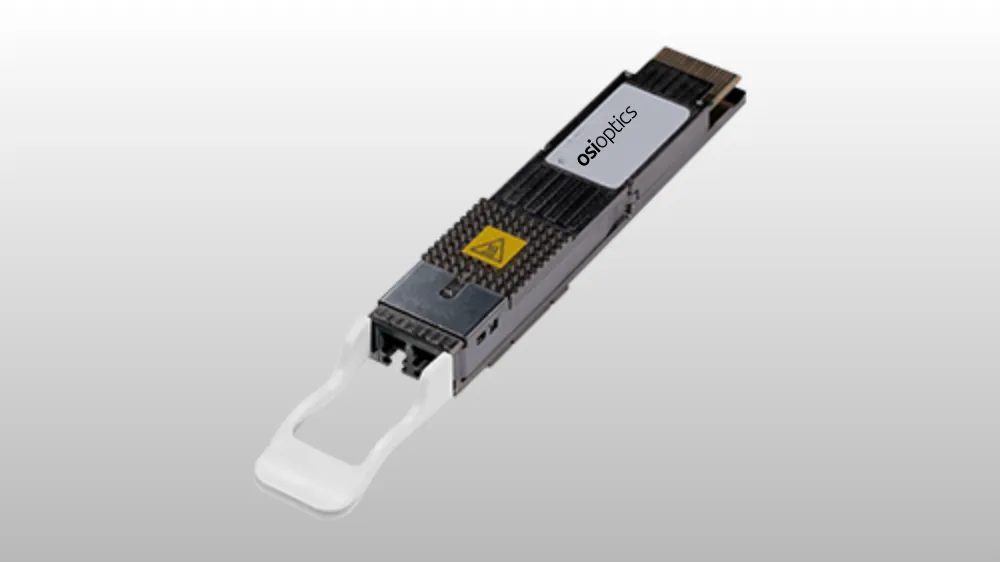

How Third-Party Optics Are Pushing Next-Gen Coherent Networks Forward
The third-party optics market was originally built by a small number of organizations focused on doing transceivers the right way: sourcing from quality manufacturers, building engineering expertise in-house, and delivering reliable, compatible solutions to the market.
Over time, many of those early leaders were acquired. As is often the case, the engineering and sales talent behind those organizations left, and the level of support customers had come to expect declined. This created an opportunity for a new generation of providers to emerge.
Today, much of the engineering expertise that originally built this industry resides within organizations like OSI Global. Our team has been directly involved in developing compatible code and optical solutions for the last 15 years. In fact, most of what exists in the market today is either a copy of that work or built on top of it. That foundation matters -- especially now, as networks move into the next generation.
From "One Generation Behind" to the Leading Edge
Historically, third-party optics served as a cost-effective alternative to OEM solutions, typically lagging behind the latest technology by one generation. The most advanced innovations remained within the OEM ecosystem, while third-party providers followed as the market matured.
That has changed.
Through strategic partnerships, we’ve been able to move from a last-generation model to operating right alongside the leading edge of network evolution.
Our relationship with Smartoptics is a great example. Rather than waiting for technology to trickle down from OEM roadmaps, we have direct alignment with one of the most forward-leaning optical innovators in the industry -- bringing deep expertise in coherent optics, open line systems, and DWDM solutions that interoperate seamlessly with the major OEM platforms our customers already run.
This positions us to lead in the technology areas that matter most right now: 800G ZR and ZR+ coherent pluggables for the next wave of high-capacity, low-power transport; 100G QSFP DCO, which is collapsing full transponder shelves into a single pluggable form factor for metro, regional, and access networks; and modern Metro ROADM solutions that give customers wavelength-level control without locking them into a single vendor's ecosystem.
Thanks to our partnerships, we are no longer the value alternative arriving a generation late. Today, we bring leading-edge coherent and ROADM technology to market on day one – something that third-party optics could not have achieved in the past.
A More Flexible Way to Build Modern Networks
What this really enables is flexibility.
We can support legacy environments -- that’s always been a strength -- but now we can also help customers think through what their next-generation coherent network should look like.
That might mean:
- Using embedded transceivers instead of full optical systems
- Mixing OEM platforms instead of staying locked into one ecosystem
- Designing networks that are simpler, more efficient, and more cost-effective
It gives customers options. Instead of being tied to a single vendor’s roadmap or architecture, they can be more creative in how they build and scale their networks, especially as capacity demands continue to grow.
Why Supply Chain Pressure Is Changing the Conversation
At the same time, broader market conditions are accelerating the adoption of third-party solutions. AI is driving massive consumption of optical hardware and components. Hyperscalers and large network operators are absorbing a huge percentage of available inventory, which is pushing lead times out across the board.
We’re seeing an increased backlog from major manufacturers, with optical equipment lead times extending well beyond historical norms. For example, coherent transceivers have moved from a wait time of 8–10 weeks to 26–30+ weeks.
But because we maintain inventory -- particularly on line-side optics like 100G, 400G, and 800G coherent transceivers -- we’re able to offer significantly shorter deployment timelines. In many cases, we can ship same day or next day, which helps them get to market faster and turn their customers up more quickly.
Beyond Transceivers: A Different Kind of Partner
A key differentiator in this environment is scope.
Many third-party optics providers focus exclusively on transceivers. While that specialization can be effective in specific use cases, it does not address the broader challenges associated with network evolution.
What makes OSI different is that we’re not just selling optics. We help customers:
- Maintain and support legacy infrastructure
- Design next-generation coherent network architectures
- Implement and deploy new solutions
- Solve compatibility challenges across multiple OEMs
We’re not just a vendor taking orders. We’re a partner at the table.
By evaluating the entire network environment, we can identify opportunities to reduce both CAPEX and OPEX, while reallocating resources toward next-generation infrastructure.
A Real-World Shift in Buying Strategy
We’re already seeing this change in how customers approach procurement. In one case, we supported a large service provider for 10 years on standard transceivers. More recently, they shifted their coherent optics purchasing strategy away from the OEM in favor of our more flexible, partner-driven approach. These decisions were not solely based on cost, but also on the added value we bring: availability, simplicity of engagement, inventory strategy, and the ability to collaborate on long-term network planning. We are proud that instead of just fulfilling orders, we became part of how they think about building and scaling their network.
There’s no shortage of optics vendors in the market. But once you start layering in engineering, inventory, support, and the ability to act as a true partner, it’s no longer an apples-to-apples comparison. (Even if it were, we’re confident in where we stand.)
Considerations for Network Leaders
If you’re a CTO, network architect, or infrastructure leader, the takeaway is simple:
Not all third-party optics providers are created equal.
Key considerations include:
- Depth of engineering expertise and development capabilities
- Strength and diversity of supply chain relationships
- Ability to support both legacy and next-generation technologies
- Proven track record in interoperability and multi-vendor environments
Some providers are still operating as resellers. Others -- like OSI Global -- who are actively helping drive network evolution will be best positioned to help you adapt to ongoing market shifts.