

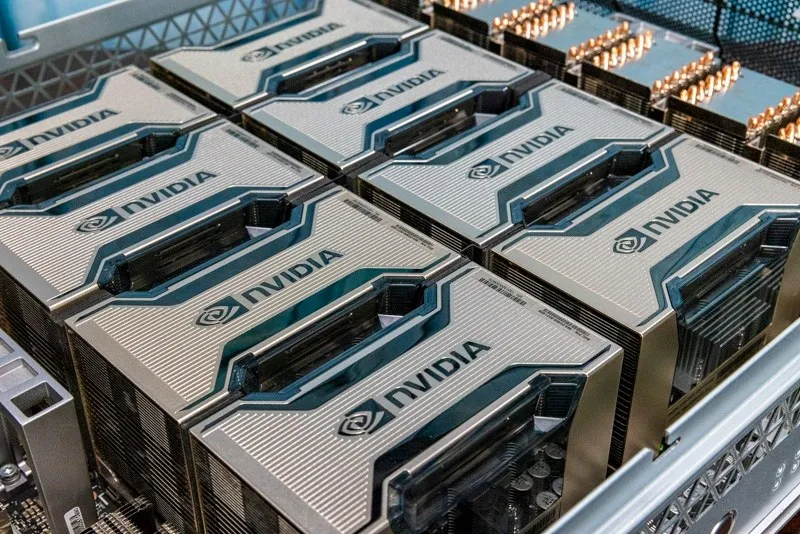

What Happens When Enterprise GPUs Reach End of Life?
For the last several years, the conversation around AI infrastructure has been dominated by one question: How do we get GPUs?
Organizations rushed to secure NVIDIA H100s, A100s, and other accelerator platforms as AI initiatives moved from experimentation to production. Hyperscalers, enterprises, research institutions, and startups all found themselves competing for the same limited supply of hardware.
But a new question is emerging: What happens when those GPUs are three, four, or five years old?
That's the conversation we're starting to have with customers today.
GPUs Are Entering a New Phase of Their Lifecycle
At OSI Global, we are beginning to see GPU-equipped systems reach the stage where organizations are evaluating alternatives to OEM support and considering broader lifecycle strategies.
In many ways, a GPU is simply another server component. It's a part that can fail, require replacement, need support coverage, and eventually become part of a long-term infrastructure strategy.
But GPUs are also fundamentally different. Over the years, we've watched storage evolve from spinning disks to SSDs and then NVMe. Those were natural technology iterations. GPUs feel different. They represent an entirely new category of infrastructure economics, and that creates questions many organizations haven't had to answer before.
- How long should these assets stay in production?
- What does the secondary market look like?
- Will used GPUs become readily available?
- Who will stock them?
- How will replacement inventories be managed?
- What happens when a single component is worth tens of thousands of dollars?
Those questions are becoming increasingly important as the first major wave of enterprise AI infrastructure matures.
The Economics Change When One Component Costs $20,000+
For years, server support pricing was relatively straightforward. A standard enterprise server might cost a few hundred dollars per year to support through a third-party maintenance program. Replacement components were widely available, pricing was predictable, and the secondary market was mature.
GPUs change that equation. Historically, we could look at a server and build a fairly predictable support model around it. Today, a single GPU inside that server may be worth $20,000, $30,000, or more. That impacts how organizations think about risk, sparing strategies, and lifecycle management.
It also creates entirely new challenges for organizations evaluating support strategies. How do you price risk? How do you stock replacement inventory? How do you guarantee availability when supply remains constrained?
And perhaps most importantly: How do you support systems when the replacement component itself may be difficult to source?
Availability Is Improving. Pricing Is Not.
The market has made progress since the height of the GPU shortage, but availability and pricing remain very different challenges.
While availability has improved somewhat, demand for H100 and H200 GPUs is still strong. Supply is still tight in some areas, and prices are high. The result is a market where customers often find themselves evaluating multiple options:
- New GPUs
- Certified pre-owned GPUs
- Previous-generation GPUs
- Alternative OEM platforms
- Mixed GPU environments
For many organizations, the objective isn't about acquiring the newest accelerator available, but about trying to solve practical business problems:
- Faster deployment than OEM lead times
- Expansion of existing GPU clusters
- Alternatives to escalating cloud AI costs
- AI infrastructure that integrates with existing tech stack
- Lower-cost options that still deliver meaningful AI performance
The biggest growth area I'm seeing are L40S, RTX PRO 6000 Blackwell, and H200 because many enterprises don't need an eight-way H100 cluster — they need practical AI infrastructure that delivers ROI.
Supporting GPUs Requires a Different Kind of Creativity
One of the most interesting lessons we've learned is that traditional support models don't always translate directly into the GPU market.
In one engagement, a customer had a substantial installed base of GPU-equipped systems. The challenge went beyond supporting the servers themselves to determining how to handle the GPUs. Replacement inventory was hard to come by, available units were expensive, and secondary-market sourcing was limited.
In that situation, we couldn't offer a standard support contract. Instead, we had an honest conversation about what was available, what wasn't, and how we would respond if a failure occurred. We helped the customer understand the realities of the market and build a practical plan around them.
In another case involving high-end GPU-equipped Supermicro systems, the challenge was different. There were only a handful of systems in production, so buying spare GPUs would have significantly increased support costs. Instead, OSI Global worked with a specialized GPU inventory provider to create a reservation-style arrangement that secured future availability without requiring a full inventory purchase upfront.
The specifics vary from customer to customer, but the bottom line is that GPU support is often less about applying a standard process and more about developing a practical strategy around availability, risk, and pricing.
The Secondary GPU Market Is Still Taking Shape
One of the biggest unknowns facing the industry is what the long-term GPU secondary market will look like.
Historically, enterprise infrastructure has followed relatively predictable patterns. Hardware enters production, remains in service for several years, and eventually moves into refurbishment and secondary-market channels.
GPUs may not follow the same path.
Some organizations are already sitting on large quantities of unused AI hardware. Others are aggressively refreshing infrastructure to remain competitive. Meanwhile, new architectures continue to arrive at an accelerated pace.
What remains unclear is how the secondary market will ultimately develop. Will inventory gradually flow into refurbishment channels? Will support providers and brokers begin stocking larger GPU inventories? Or will demand continue to absorb available supply as quickly as it appears?
We're still in the early innings, but we understand that GPUs are long-term infrastructure assets that require the same lifecycle planning, support strategy, and financial discipline as every other critical component in the data center.
The AI Infrastructure Conversation Is Growing Up
For the past several years, the computing component industry has focused on finding GPUs, securing allocations, and building AI clusters.
That conversation isn't going away, but we're entering a new phase.
Organizations are beginning to ask harder questions about support, lifecycle planning, replacement strategies, and long-term economics.
From my perspective, that's where the next challenge lies. The industry has spent years talking about how to acquire GPUs. The next phase will be figuring out how to support them, extend their useful life, manage risk, and maximize the value of those investments over time.
The companies that answer those questions successfully will be the ones that extract the most value from their AI investments.
Contact OSI Global to discuss your GPU support strategy.