

What Happens When Your AI Servers Age? A Guide to AI Server Lifecycle and Support
AI infrastructure is still relatively new for many organizations. But some of the servers powering today's AI workloads are no longer new at all.
NVIDIA A100 GPUs began shipping in 2020, meaning some of the first generation of GPU-heavy AI servers have now been operating for five years or more. Even H100-based systems, which began reaching the market in 2022, are moving beyond the "new infrastructure" stage.
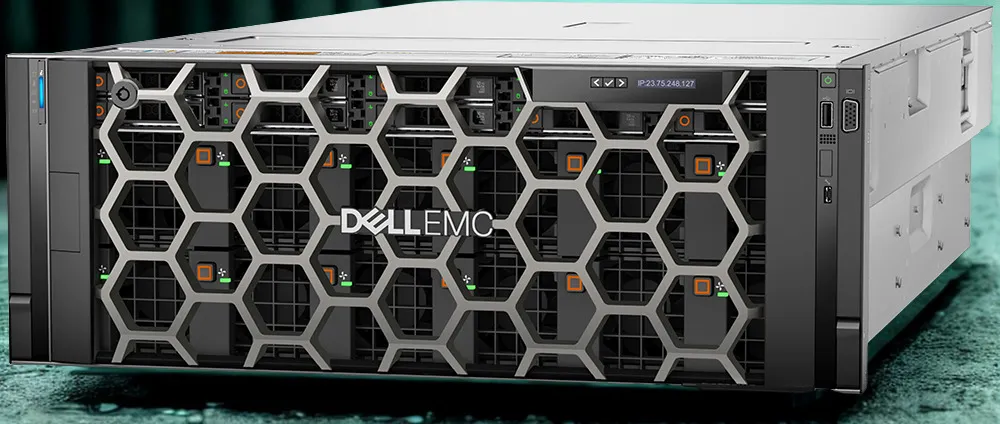
For organizations running platforms such as the Dell PowerEdge XE8545, Dell PowerEdge R750xa and R7525, Lenovo ThinkSystem SR670 V2, HPE Apollo 6500 Gen10 Plus, and earlier-generation Supermicro GPU servers, this is becoming a practical infrastructure question. These systems may still provide valuable AI compute even as they move further into their hardware and OEM support lifecycles.
That creates a question IT teams haven't had to think much about until recently:
What happens when an AI server gets older, but you still need it?
Unlike traditional servers, replacing an AI server simply because it has reached a certain age may not make economic or operational sense. GPU systems represent a significant investment, and older systems can continue supporting valuable training, inference, analytics, and other accelerated workloads.
The challenge is keeping them reliable.
Understanding the AI server lifecycle, and planning for support before the original warranty or OEM contract becomes an issue, can help organizations get more value from their existing infrastructure.
The Typical AI Server Lifecycle
There is no universal expiration date for an AI server.
Its useful life depends on several factors, including the GPU generation, workload, utilization, cooling environment, application requirements, software compatibility, and the economics of upgrading.
In many environments, the lifecycle looks something like this:
Years 0–3: Deployment and OEM support
The system is deployed, optimized, and typically covered by an OEM warranty or support agreement. Hardware failures are handled through the original support channel.
Years 3–5: Evaluate, extend, or refresh
The infrastructure is no longer new, but it may still meet performance requirements. This is often when organizations begin evaluating whether to refresh the equipment, renew OEM support, or explore third-party maintenance (TPM).
Years 5+: Extend where it makes sense
Some servers may be replaced because newer GPUs provide a compelling performance, density, or power-efficiency advantage.
Others may continue running because they still perform their assigned workloads well.
That distinction is important. A server does not necessarily become obsolete simply because a newer GPU generation exists. An A100 system that is no longer the organization's preferred platform for cutting-edge model training, for example, may still have substantial value for inference or other workloads.
That includes A100-based systems such as the Dell PowerEdge XE8545, Dell PowerEdge R750xa, Supermicro SYS-220GQ-TNAR+, Supermicro SYS-420GP-TNAR, Lenovo ThinkSystem SR670 V2, and HPE Apollo 6500 Gen10 Plus. Reaching a later stage of the server lifecycle does not automatically mean these platforms need to be replaced.
The infrastructure strategy therefore becomes less about age and more about workload fit, reliability, supportability, and cost.
What Starts to Fail as AI Servers Age?
AI servers contain many of the same components as traditional enterprise servers, including CPUs, memory, drives, network interfaces, power supplies, and fans. But GPU-heavy systems introduce additional complexity.
They operate with high power and thermal loads and may include multiple GPUs and high-speed interconnects inside a single system. A failure affecting one component can reduce the capacity of an extremely valuable compute node.
Potential failure points include:
- GPUs
- GPU interconnects
- Power supplies
- Cooling fans
- Memory
- Storage
- Network adapters
- System boards and risers
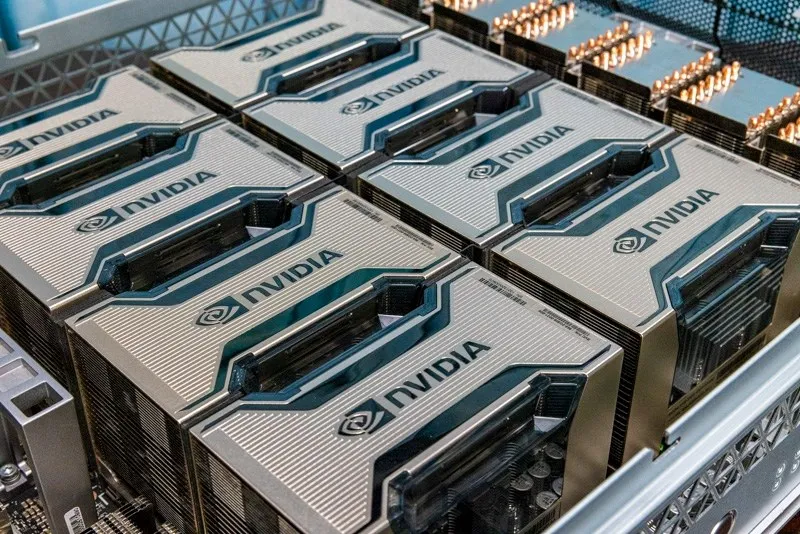
GPU reliability deserves particular attention.
A 2025 study based on 2.5 years of operational data from a large-scale AI/HPC system examined errors involving NVIDIA A40, A100, and H100 GPUs. Researchers found that failures can originate across GPU hardware, memory, and NVLink interconnects, and documented cases where GPU hardware errors ultimately led to application failures.
The lesson for infrastructure teams is that GPU failure needs to be part of the maintenance plan, particularly as clusters get larger and systems get older.
Spare Parts Planning Becomes Critical
With conventional server infrastructure, organizations have decades of experience planning for replacement drives, memory, power supplies, network cards, and other components. AI infrastructure adds another category to that conversation: GPU spares.
Consider an eight-GPU server.
If a GPU fails, replacing the entire server may be unnecessary. But waiting days or weeks for the correct GPU or system component can leave expensive compute capacity unavailable. This is why spare planning should begin before a failure occurs.
Infrastructure teams should know:
- Which GPU models are installed?
- Which system-level components are most critical?
- Are replacement GPUs available?
- Where are the spares physically located?
- Who owns those spares?
- How quickly can they be delivered?
- Is the replacement component tested and ready for deployment?
Even when a part can be sourced, an important metric is the time it takes to replace it. For an AI environment running business-critical workloads, a spare sitting halfway around the world isn't the same as one that can reach the data center within the required SLA.
GPU Availability Changes the Support Equation
GPU availability is particularly important because these aren't interchangeable commodity components. Different server platforms support specific GPU form factors, configurations, firmware, interconnects, and power requirements. A replacement needs to be compatible with the existing environment.
And as GPU generations change, the supply chain changes with them. This creates an important planning question for organizations extending the life of an AI environment:
If one of these GPUs fails two years from now, where will the replacement come from?
That question should be answered before any failure occurs. A good lifecycle strategy includes identifying sources for replacement GPUs and other critical components while the infrastructure is still healthy.
Don't Confuse OEM Support Timelines with Hardware Lifespan
Another important distinction is the difference between support lifecycle and useful hardware life.
OEM warranties, service contracts, product availability, firmware support, and hardware usefulness don't necessarily end at the same time.
This becomes especially important when planning around AI server EOL and EOSL. An OEM's end-of-life milestone may change how a server is sold or supported, but it does not necessarily mean the equipment has stopped being useful. Organizations running older Dell PowerEdge AI servers, HPE Apollo systems, Lenovo ThinkSystem GPU servers, or Supermicro GPU platforms may have workloads that can continue running effectively on that hardware.
A server may still be perfectly capable of running its workload after the original support agreement expires. Conversely, an organization may decide to refresh a supported system because newer infrastructure provides a compelling business advantage.
Software support can introduce another variable. For example, NVIDIA maintains lifecycle and compatibility policies for its AI Enterprise software stack. As architectures age, support can move to particular long-term branches or eventually be removed from newer releases.
That means infrastructure teams need to consider both sides of the equation:
Can we maintain the hardware?
and
Can we continue running the software stack we need on it?
The answers won't always be the same.
When Does TPM Make Sense for AI Servers?
Third-party maintenance becomes worth evaluating when the hardware still meets the organization's needs but the original support model no longer does.
That might happen when:
- The server still performs well. There is no compelling workload reason to replace it.
- The OEM support contract is becoming expensive. The cost of maintaining older hardware may no longer align with its role in the environment.
- You want to extend the hardware lifecycle. Instead of refreshing an entire cluster at once, TPM can support a phased lifecycle strategy.
- You operate a mixed environment. AI infrastructure may include servers from Dell, HPE, Lenovo, Supermicro, and other manufacturers. A multi-vendor TPM strategy can simplify support.
- You need more transparency around spares. For AI infrastructure in particular, knowing what replacement GPUs and system parts are available, and where they are located, can be as important as the SLA itself.
- You should expect a more proactive support experience.
A TPM provider can offer more than an alternative support contract. Better communication, direct access to support teams, and a more proactive approach to maintenance can make the overall support experience more responsive and easier to manage.
TPM isn't necessarily a replacement for OEM support across the entire AI environment. Organizations may keep new systems under OEM coverage while moving stable, older infrastructure to TPM. This creates a hybrid support model based on the lifecycle stage of each platform.
Keep Your AI Infrastructure Running
OSI Global's Systain third-party maintenance services support aging, business-critical AI server infrastructure, including GPU-heavy platforms from Dell, Supermicro, Lenovo, and HPE.
With customizable SLAs, transparent sparing, direct access to engineers, and support for NVIDIA GPU environments, OSI Global helps organizations extend the lifecycle of AI infrastructure without automatically defaulting to an OEM-driven hardware refresh.
Do you have AI servers approaching the next stage of their lifecycle? Get an AI Server TPM quote from OSI Global.